 What Is Ashtanga Primary Series?
The Ashtanga Primary Series, traditionally known as Yoga Chikitsa (yoga therapy), is the first sequence in the Ashtanga Vinyasa Yoga system developed and taught in the tradition of K. Pattabhi Jois.
It is a structured, dynamic yoga practice that synchronizes breath, movement, posture, and focused attention. The sequence follows a specific order of asanas, gradually progressing from standing postures to seated postures, backbends, and finishing poses.
The Primary Series is traditionally intended to support strength, flexibility, stability, and focused awareness. However, it is a physically demanding practice and should be adapted to individual abilities.
The Main Principles of Ashtanga Yoga
1. Ujjayi Pranayama
Gentle, controlled breathing with a soft sound in the throat helps coordinate movement and maintain concentration. Breathing should remain comfortable, without strain or forced breath retention.
2. Vinyasa
Vinyasa connects postures through coordinated breathing and movement, creating a continuous flow between asanas.
3. Drishti
Drishti refers to a specific point of focus for the eyes. It supports balance, concentration, and inward awareness.
4. Bandhas
Bandhas are traditionally described as energetic locks, including Mula Bandha and Uddiyana Bandha. Beginners should first learn comfortable breathing and gentle trunk engagement rather than forceful abdominal contractions.
Structure of the Primary Series
The traditional sequence includes the following sections.
1. Opening sequence
- Sun Salutation A
- Sun Salutation B
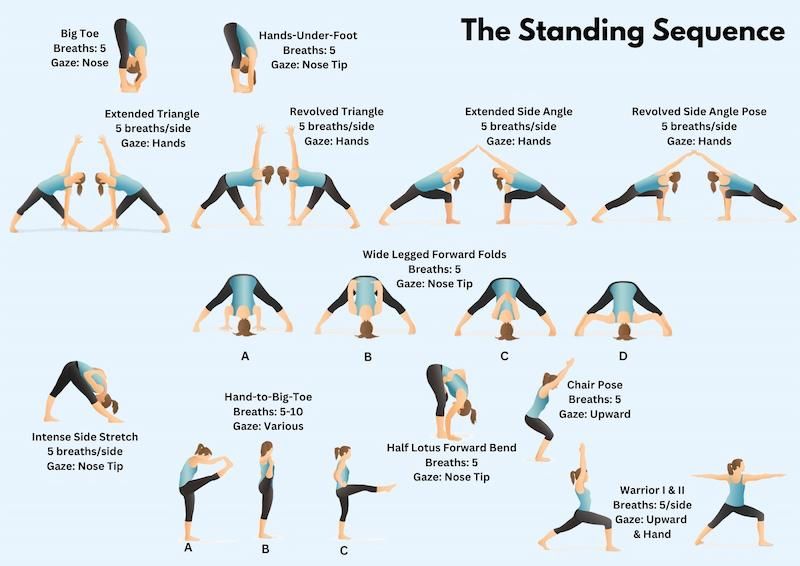
- Standing postures
2. Seated postures
- Forward bends
- Hip-opening postures
- Twists and core-strengthening postures
- Arm-balance postures
3. Backbending
- Backbending preparation
- Urdhva Dhanurasana, when appropriate
4. Finishing sequence
- Inversions and finishing asanas, as appropriate
- Lotus-based postures in the traditional sequence
- Final relaxation
Benefits of Regular Practice
With appropriate instruction and consistent practice, Ashtanga yoga may help improve:
- Strength and endurance: through repeated weight-bearing movements.
- Flexibility and mobility: especially in the hips, hamstrings, shoulders, and spine.
- Balance and coordination: through standing and transitional postures.
- Concentration: by coordinating movement with breath and gaze.
- Stress management: through focused movement and mindful breathing.
Results vary with experience, health, practice intensity, and consistency. The full Primary Series is not necessary to gain these benefits.
Safety Guidelines
- Learn the sequence from a qualified yoga teacher, especially before attempting arm balances, deep backbends, or inversions.
- Do not push through sharp pain, dizziness, numbness, or unusual breathlessness.
- Modify or skip Chaturanga, deep forward folds, and strong twists if they aggravate existing joint or back problems.
- If you are pregnant, recovering from surgery, or have a significant medical condition or injury, seek individualized guidance before practising.
- Progress gradually; flexibility and the ability to perform advanced postures are not measures of yoga proficiency.
Remember: Ashtanga is not a competition to complete every posture. The quality of breathing, attention, and safe movement matters more than depth or speed.