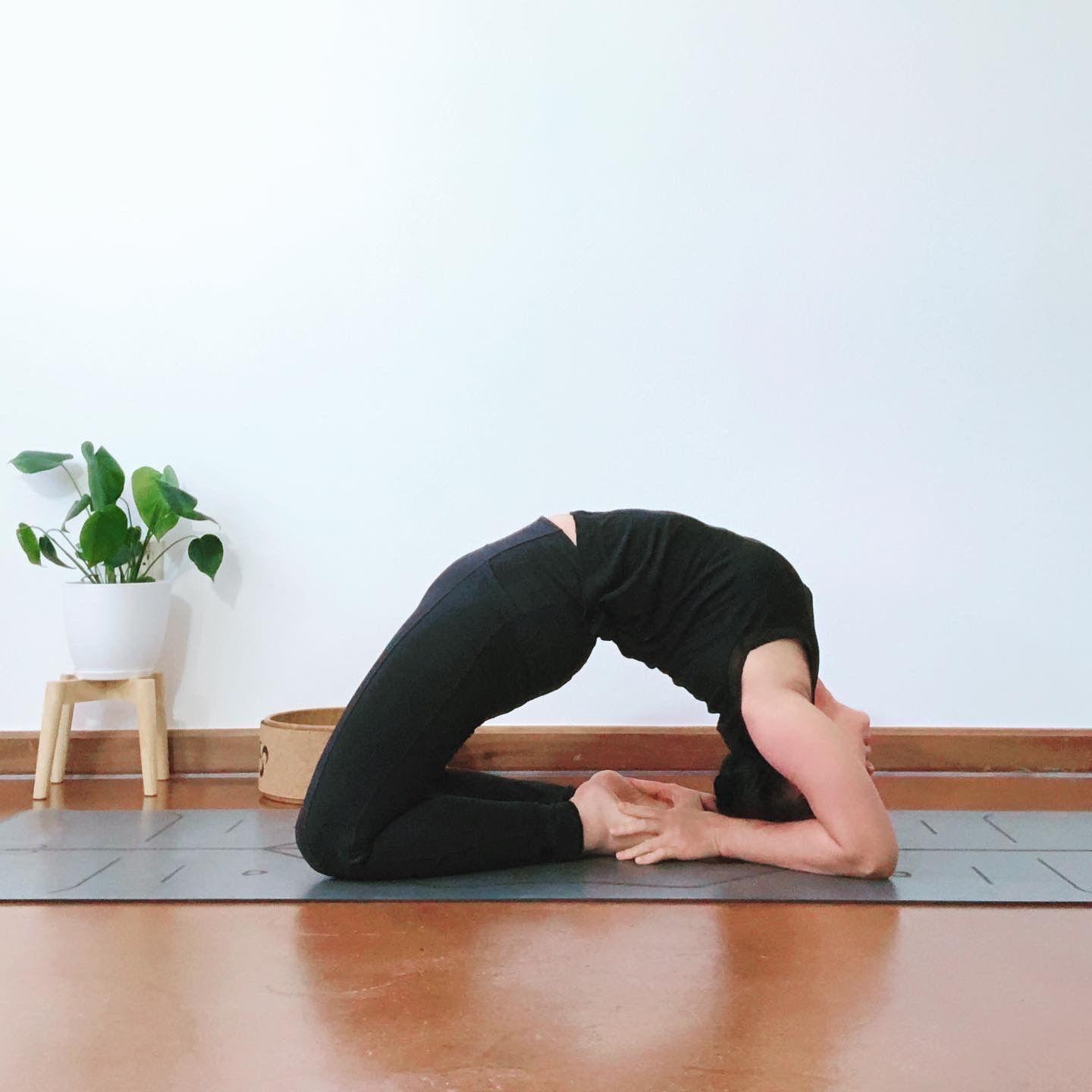
 Kapotasana, commonly translated as Pigeon Pose or King Pigeon Pose, is an advanced yoga backbend that combines deep spinal extension, hip mobility, shoulder flexibility, and controlled breathing.
The full expression requires significant preparation and should be approached gradually.
Sanskrit: कपोतासन
Level: Advanced
Pose type: Backbend, chest opener, hip and shoulder stretch
Note: Kapotasana is not the same as the commonly practised One-Legged King Pigeon Pose (Eka Pada Rajakapotasana). Kapotasana generally refers to a deeper kneeling backbend in which the hands reach toward or hold the feet.
1. Benefits of Kapotasana
Opens the chest and shoulders
Encourages shoulder mobility and chest expansion when performed without compressing the lower back.
Develops backbend control
Builds awareness of spinal extension and the coordinated movement of the hips, thoracic spine, and shoulders.
Stretches the front of the body
Can stretch the hip flexors, abdominal region, and front thighs, depending on individual mobility.
Builds body awareness
Encourages patience, steady breathing, balance, and mindful movement.
2. Step-by-step: How to practise Kapotasana
Step 1 — Begin in a kneeling position
Kneel on a padded yoga mat with your knees approximately hip-width apart. Keep your torso upright and breathe steadily.
Step 2 — Prepare the spine
Practise a comfortable Camel Pose (Ustrasana). Lift through the chest, keep the hips supported over the knees, and avoid forcing the lumbar spine into a sharp bend.
Step 3 — Gradually deepen the backbend
With sufficient preparation, lift the sternum and gently move the upper back backward. Let the head follow the spine rather than dropping it abruptly.
Step 4 — Reach toward the feet
Only if your spine and shoulders remain comfortable, reach the hands toward the floor and then the feet. Keep breathing; do not force your head or hands into position.
Step 5 — Exit slowly
Return with control, using support or a qualified teacher if needed. Rest in a comfortable neutral position before moving into a gentle counterpose.
3. Common mistakes to avoid
- Forcing the lower back into excessive compression instead of distributing the backbend through the spine.
- Letting the knees slide too far apart or allowing the hips to shift uncontrollably.
- Holding the breath or clenching the jaw.
- Pulling the head backward without adequate neck control.
- Trying to grasp the feet before the shoulders and spine are sufficiently prepared.
4. Safety precautions
Kapotasana is an advanced posture, not a beginner's flexibility test. Avoid attempting the full version without qualified guidance if you have back or neck pain, a shoulder injury, or limited spinal mobility. If you experience sharp pain, numbness, tingling, dizziness, or pressure in the lower back, come out of the pose carefully.
Given that deep backbends can place substantial demands on the spine, anyone with persistent lower-back stiffness or a known spinal problem should establish comfortable, pain-free movement before progressing.