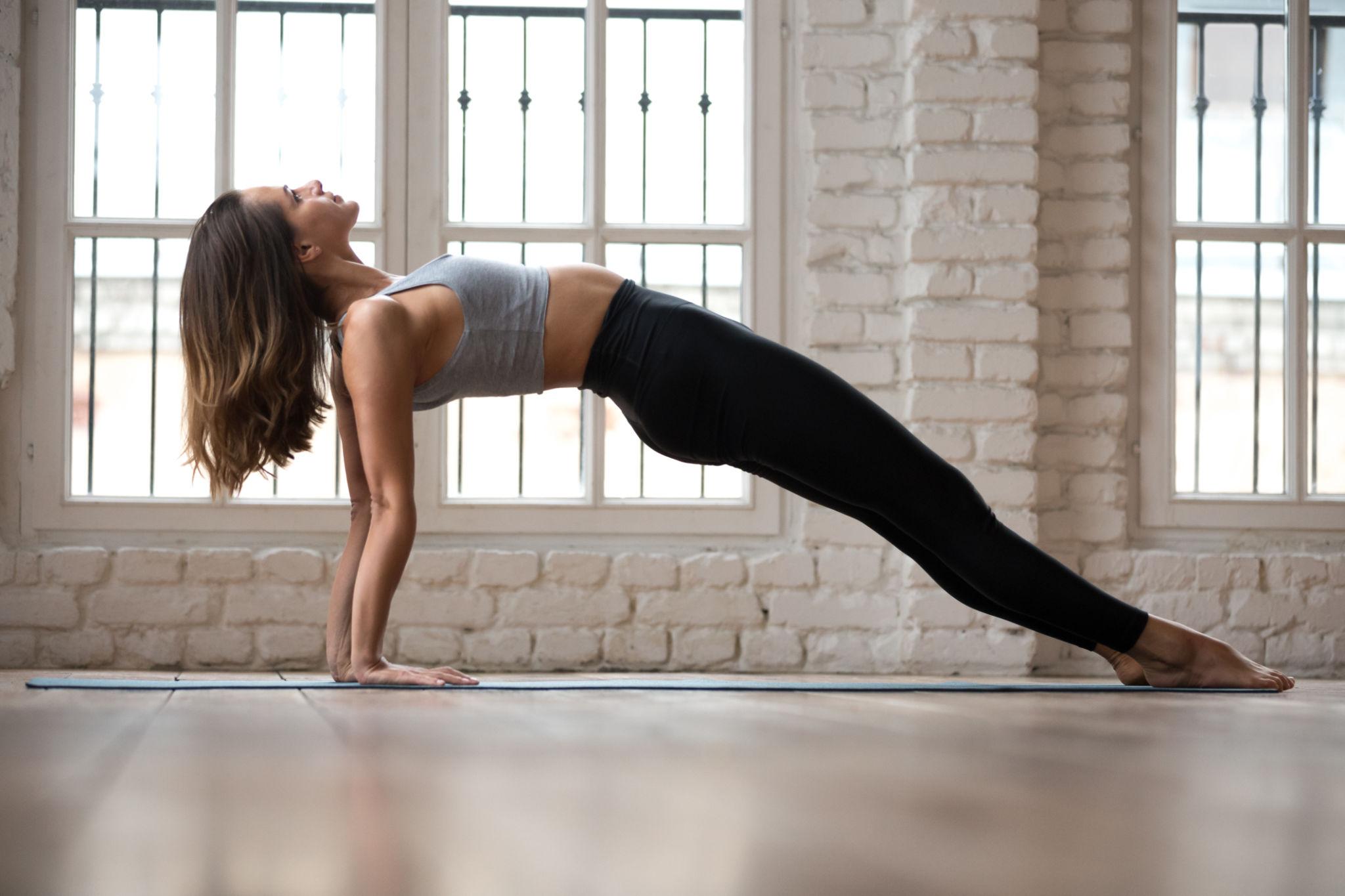
 Purvottanasana, commonly known as Upward Plank Pose or Intense East Stretch, is a back-body strengthening yoga posture that opens the chest, stretches the front of the body, and strengthens the arms, shoulders, glutes, and legs.
- Sanskrit: पूर्वोत्तानासन
- Level: Intermediate
- Type: Seated arm balance and backbend
- Primary focus: Chest opening, shoulder strength, and posterior-chain activation
- Drishti (gaze): Upward or gently backward, if comfortable
1. How to Perform Purvottanasana
Step 1: Begin in Staff Pose
Sit with your legs extended straight in front of you. Keep your spine upright and place your palms on the floor behind your hips, fingers pointing toward your feet or slightly outward.
Step 2: Prepare your shoulders
Press your palms and feet firmly into the mat. Draw your shoulder blades back gently and engage your abdominal muscles.
Step 3: Lift into Upward Plank
Press through your hands and heels, lift your hips, and raise your chest. Keep your legs active and your body in a long, elevated line without letting your hips sag.
Step 4: Hold and release
Breathe normally for 10–20 seconds, if comfortable. Keep your neck neutral or gaze gently upward. Lower your hips slowly and return to Staff Pose.
2. Benefits of Purvottanasana
- Strengthens the upper body: Works the triceps, shoulders, and upper back.
- Opens the chest: Stretches the pectoral muscles and front of the shoulders.
- Strengthens the posterior chain: Activates the glutes, hamstrings, and spinal extensor muscles.
- Improves body awareness: Encourages coordinated engagement of the arms, core, and legs.
- Counterbalances forward-rounded postures: Can complement a routine involving prolonged sitting when performed with good alignment.
Note: The pose may improve strength and mobility, but it does not independently correct spinal conditions or guarantee better posture.
3. Common Mistakes to Avoid
- Letting the hips sag toward the floor.
- Locking the elbows forcefully or collapsing into the shoulders.
- Pushing the head too far backward.
- Holding the breath.
- Turning the feet or knees into uncomfortable positions.
4. Safety Precautions
Avoid the full pose or seek guidance from a qualified yoga therapist if you have:
- Wrist, shoulder, or elbow pain or injury.
- Significant neck or lower-back pain.
- Recent surgery or an injury affecting weight-bearing through the arms.
Since this posture places considerable load on the wrists and shoulders, start with a gentle preparation and stop if you experience pain, numbness, dizziness, or tingling.