 Joint rotations are gentle movements used in yoga warm-ups to improve joint mobility, prepare the body for asana practice, and help reduce stiffness
. In traditional yoga, these movements are closely related to Sukshma Vyayama (subtle joint exercises) and the Pawanmuktasana preparatory practices.
They are especially useful for beginners, people with sedentary lifestyles, and practitioners who want to develop a regular mobility routine.
1. Neck Rotations (Greeva Sanchalana)
Starting position: Sit comfortably with your spine upright and shoulders relaxed.
Practice:
- Slowly bend your head forward and return to neutral.
- Tilt your right ear toward your right shoulder, then switch sides.
- Turn your head gently to the right and left.
- Keep the movements slow and pain-free.
Repetitions: 3–5 per movement.
Benefits: Encourages neck mobility and helps release muscular tension around the neck and shoulders.
Precaution: Avoid full circular neck rolls, forceful stretching, and movements that cause dizziness, pain, or tingling.
2. Shoulder Rotations (Skandha Sanchalana)
Starting position: Sit or stand comfortably with your arms relaxed.
Practice:
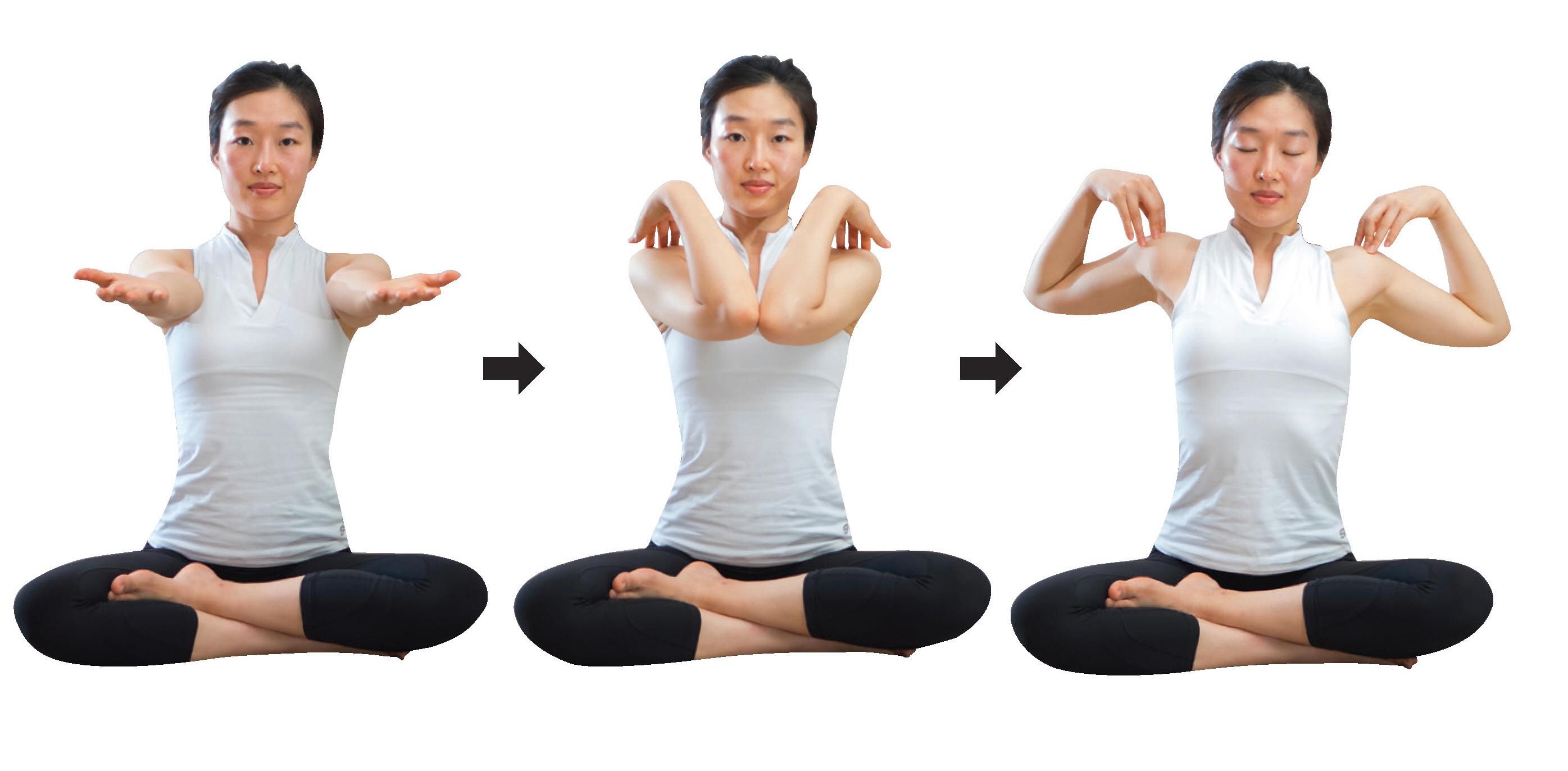
- Lift both shoulders toward your ears.
- Move them backward, downward, and forward in a smooth circle.
- Repeat in the opposite direction.
- Keep your neck relaxed and avoid shrugging forcefully.
Repetitions: 5–8 circles in each direction.
Benefits: Promotes shoulder mobility, warms up the upper body, and prepares the shoulders for weight-bearing poses.
Precaution: If you have shoulder impingement or an injury, use a smaller range of motion.
3. Wrist Rotations (Manibandha Sanchalana)
Starting position: Extend your arms forward or keep your elbows bent comfortably.
Practice:
- Make loose fists or keep your fingers relaxed.
- Rotate both wrists slowly clockwise.
- Reverse the direction.
- Keep the forearms relatively still.
Repetitions: 5–10 circles in each direction.
Benefits: Prepares the wrists for poses such as Tabletop, Cat–Cow, and Downward-Facing Dog.
Precaution: If wrist extension is uncomfortable, keep your wrists neutral and avoid putting body weight on them.
4. Ankle Rotations (Gulpha Sanchalana)
Starting position: Sit on a chair or on the floor with one leg comfortably extended.
Practice:
- Lift one foot slightly off the floor.
- Rotate the ankle clockwise in a controlled circle.
- Reverse the direction.
- Repeat with the other foot.
Repetitions: 5–10 circles in each direction per ankle.
Benefits: Encourages ankle mobility and prepares the feet for standing postures, balance work, and walking.
Precaution: Avoid forcing the movement if you have swelling, a recent ankle sprain, or pain.
5. Knee Rotations (Janu Sanchalana)
Starting position: Sit with one knee bent and the thigh supported, or sit on a chair.
Practice:
- Gently bend and straighten the knee within a comfortable range.
- Alternatively, hold behind the thigh and make small controlled movements with the lower leg.
- Repeat on the other side.
Repetitions: 5–8 gentle bends per knee.
Benefits: Helps maintain comfortable knee movement and prepares the legs for gentle yoga practice.
Important: Do not twist the knee joint in circles or forcefully rotate a bent knee. If you have knee pain, swelling, or instability, use gentle bending and straightening only if comfortable.
Breathing: Breathe naturally throughout the practice. Do not hold your breath.
Best time to practise: Before yoga asanas, walking, or other light physical activity.
Safety note: Keep every movement slow, controlled, and pain-free. Joint rotations can help maintain mobility, but they should not cause sharp pain, numbness, or dizziness. If these occur, stop the exercise.