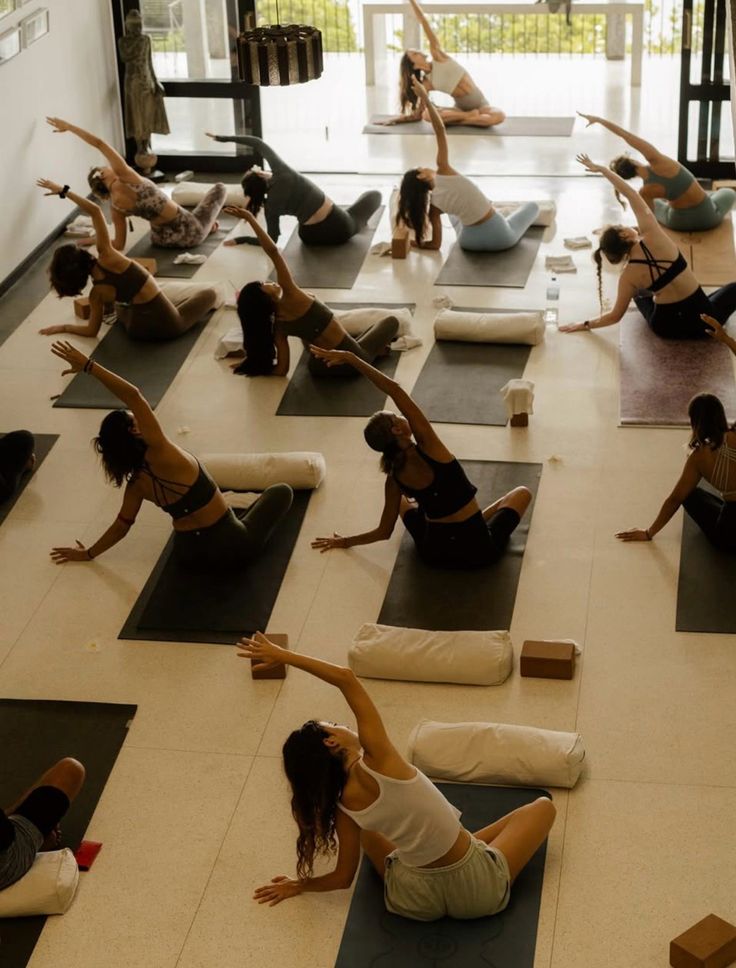
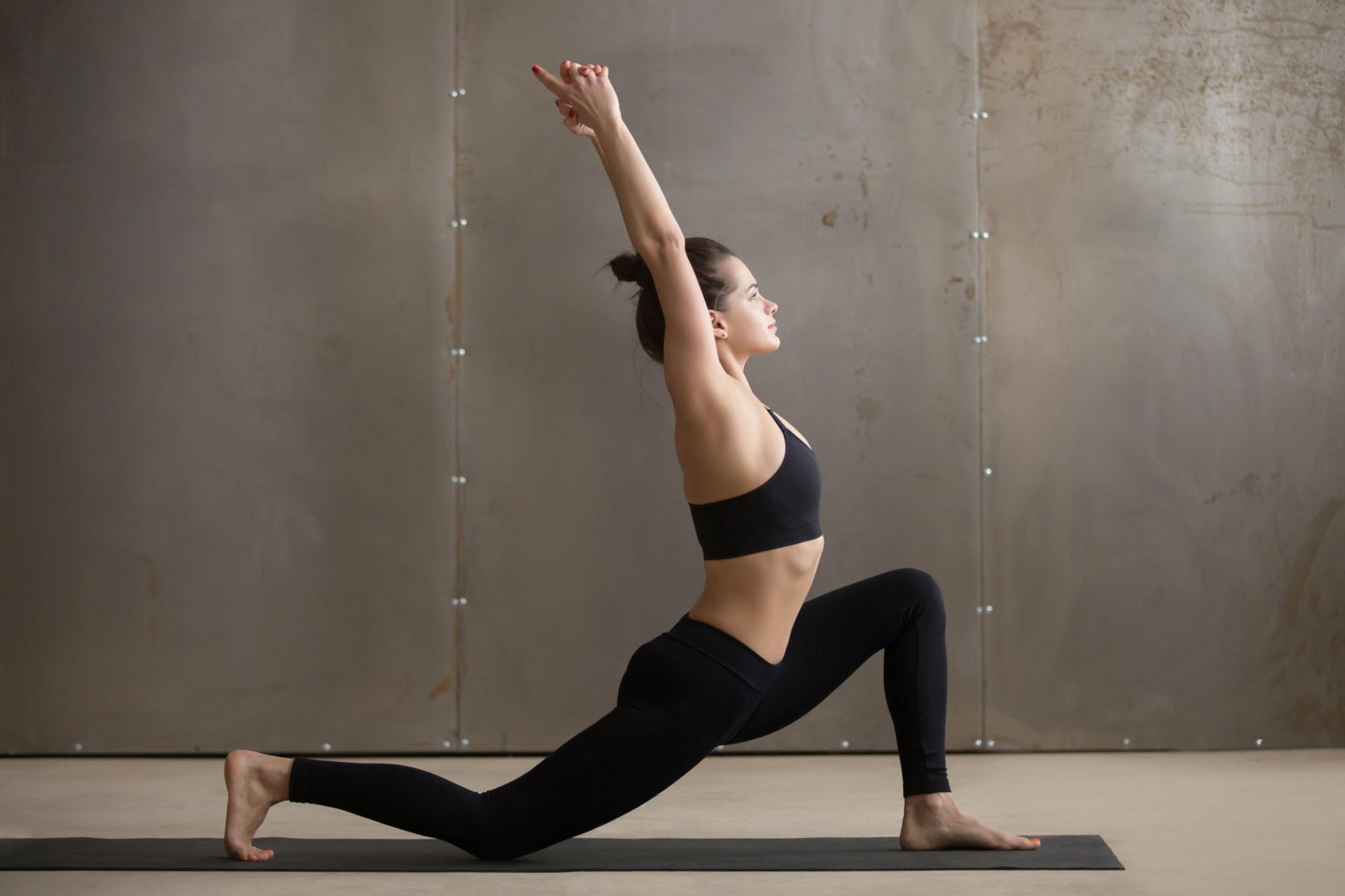
 Anjaneyasana, commonly known as Low Lunge or Crescent Moon Pose, is a foundational yoga posture that stretches the hip flexors and thighs while improving balance, mobility, and body awareness.
It is useful in Hatha Yoga, Vinyasa Yoga, and warm-up sequences.
1. Steps to Practice
Step 1: Start in Tabletop
Come onto your hands and knees, with wrists beneath shoulders and knees beneath hips.
Step 2: Bring One Foot Forward
Place your right foot between your hands. Keep your left knee on the mat and pad it with a folded blanket if needed.
Step 3: Lift Your Torso
Slowly raise your upper body, keeping your pelvis facing forward as comfortably as possible. Place your hands on your hips or thighs.
Step 4: Raise Your Arms
Inhale and lift your arms overhead if comfortable. Gently engage your abdomen and avoid overarching your lower back.
Step 5: Hold and Release
Breathe slowly for 3–5 breaths. Return your hands to the mat, step back, and repeat on the other side.
2. Benefits
- Hip flexibility: Stretches the hip flexors of the back leg.
- Thigh mobility: Gently stretches the front of the rear thigh.
- Balance and stability: Develops coordination and lower-body control.
- Posture awareness: Encourages an upright torso and controlled pelvic positioning.
- Chest and shoulder mobility: The arms-overhead variation opens the front of the body.
- Yoga preparation: Helps prepare the body for Warrior poses, deeper lunges, and selected backbends.
3. Common Mistakes to Avoid
- Allowing the front knee to collapse inward.
- Forcing the hips too far forward.
- Arching or compressing the lower back.
- Shrugging the shoulders while lifting the arms.
- Holding the breath or forcing a deep stretch.
4. Modifications and Precautions
- Place a folded blanket beneath the back knee.
- Keep your hands on your front thigh or use yoga blocks for support.
- Keep your hands on your hips if raising your arms causes discomfort.
- Shorten your stance if you feel strain in the front knee or hip.
Avoid forcing the posture if you have an acute knee or hip injury. If you have significant lower-back pain, use a supported, shallow variation and stop if symptoms increase.