 The Anti-Rheumatic Group is the first part of the Pawanmuktasana series described in the Bihar School of Yoga tradition.
It consists of gentle joint movements designed to release stiffness, improve mobility and prepare the body for more advanced yoga practices.
Despite its name, this group does not cure rheumatoid arthritis or other rheumatic diseases. It is primarily a series of joint-loosening exercises.
1. Benefits
- Helps maintain mobility in the fingers, wrists, ankles, knees and other joints.
- Encourages gentle circulation and coordination.
- May reduce stiffness associated with inactivity.
- Develops awareness of body movement and relaxation.
- Provides a suitable warm-up before a yoga session.
2. Main exercises in the series
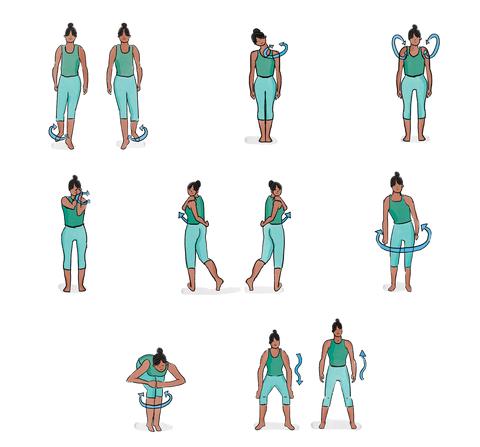
1. Toe Bending
Sit with legs extended. Move the toes forward and backward slowly.
Repetitions: 5–10
2. Ankle Bending
Flex the feet toward the body, then point the toes away without forcing the movement.
Repetitions: 5–10
3. Ankle Rotation
Rotate both ankles gently in one direction and then the other.
Repetitions: 5 circles each direction
4. Knee Bending
Bend one knee, sliding the heel toward the body, then straighten the leg comfortably. Repeat on the other side.
Repetitions: 5–10 per leg
5. Wrist Rotation
Extend the arms comfortably and rotate the wrists in both directions.
Repetitions: 5 circles each direction
6. Shoulder Rotation
Rotate the shoulders slowly forward and backward while keeping the neck relaxed.
Repetitions: 5–10 in each direction
Other commonly taught movements in this group include finger bending, wrist bending, elbow bending, shoulder stretching, neck movements, and hip and knee loosening exercises. The precise exercise order can vary by teaching manual.
3. How to practise
- Sit in a comfortable position, preferably Dandasana for seated leg exercises.
- Keep the spine upright without unnecessary tension.
- Move slowly and synchronise breathing naturally with movement.
- Avoid jerking, bouncing or forcing the joints to their end range.
- Practise for around 10–15 minutes, adjusting to your comfort.
4. Who can practise it?
- Beginners starting yoga.
- People experiencing mild stiffness from prolonged sitting.
- Older adults who can perform the movements safely.
- People seeking gentle mobility exercises, with appropriate modifications.
Important precautions: If you have rheumatoid arthritis, significant swelling, an acute joint flare, a recent injury or surgery, consult a healthcare professional before practising. Stop if a movement causes sharp pain, increasing swelling, numbness or dizziness.