The Shakti Bandha Group is the third group in the traditional Pawanmuktasana series described in the Bihar School of Yoga tradition. These practices are more dynamic than the joint movements in Part 1 and the digestive practices in Part 2.
The Sanskrit term Shakti Bandha can be understood as practices that help release energy blockages and develop physical vitality. They generally involve coordinated movements of the spine, pelvis, abdomen and major joints.
1. Objectives of the Shakti Bandha Group
- Improve mobility of the spine, hips and pelvis.
- Develop coordination between movement and breathing.
- Gently activate the abdominal and pelvic regions.
- Improve body awareness and physical stamina.
- Prepare the body for more advanced yoga practices.
These are traditional yoga aims; specific therapeutic effects vary from person to person.
2. The nine main practices
The commonly taught sequence includes nine dynamic practices.
Shakti Bandha Asanas
1. Rajju Karshanasana — Pulling the Rope
Sit with legs extended. Alternately raise each arm overhead, stretching upward as if pulling a rope. Coordinate the movements with natural breathing.
Focus: shoulders, arms and upper back.
2. Gatyatmak Meru Vakrasana — Dynamic Spinal Twist
Sit with legs comfortably apart. Rotate the torso from side to side, bringing one hand toward the opposite foot while the other arm moves behind you.
Focus: spinal mobility and trunk coordination.
3. Chakki Chalanasana — Churning the Mill
Sit with legs wide apart, interlock your fingers and extend your arms. Circle the torso forward and around as if operating a traditional hand mill. Change directions.
Focus: hips, abdomen and spinal movement.
4. Nauka Sanchalanasana — Rowing the Boat
Sit with legs extended and move the torso back and forward as though rowing a boat, coordinating the arms with the movement.
Focus: trunk mobility and abdominal engagement.
5. Kashtha Takshanasana — Chopping Wood
Adopt a comfortable squat or a modified seated position. Raise the arms overhead and bring them down in a controlled chopping action, following the traditional breathing pattern.
Focus: shoulders, trunk and hip mobility.
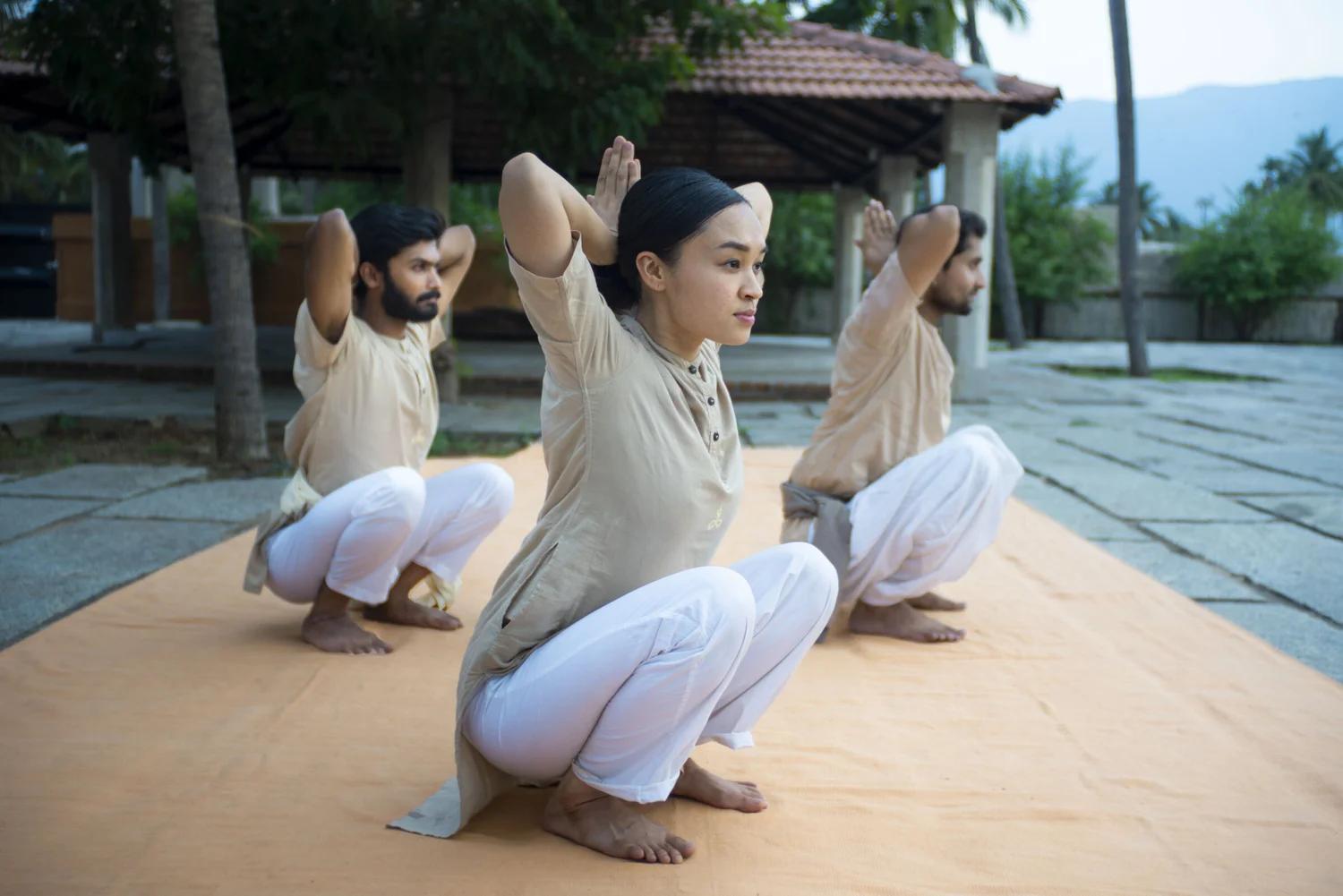
6. Namaskarasana — Salutation Pose
Squat comfortably with the palms together in front of the chest. Keep the spine upright and the heels supported as needed.
Focus: hips, thighs, ankles and balance.
7. Vayu Nishkasana — Wind-Releasing Pose
Begin in a squat with the hands resting on the knees. Follow the taught variation to move between the squat and a forward-bending position, without forcing the knees or back.
Focus: hips, thighs and trunk mobility.
8. Kauva Chalasana — Crow Walking
Maintain a low squat with the hands on the knees and practise small, controlled steps as taught by your instructor.
Focus: lower-limb coordination and balance.
9. Udarakarshanasana — Abdominal Stretch Pose
From a comfortable squat, gently guide one knee toward the floor on the opposite side while rotating the torso. Return to the centre and change sides.
Focus: gentle abdominal rotation, hips and lower back mobility.
. Important precautions
- If you have lower-back pain or spinal stiffness, avoid deep forward bends and forceful twisting until you have been assessed by a qualified professional.
- Modify deep squats if you have knee, ankle or hip problems; use support or a chair.
- Avoid straining or holding your breath.
- If pregnant, recovering from surgery, or experiencing a hernia or acute musculoskeletal injury, seek individual medical guidance before practising this sequence.