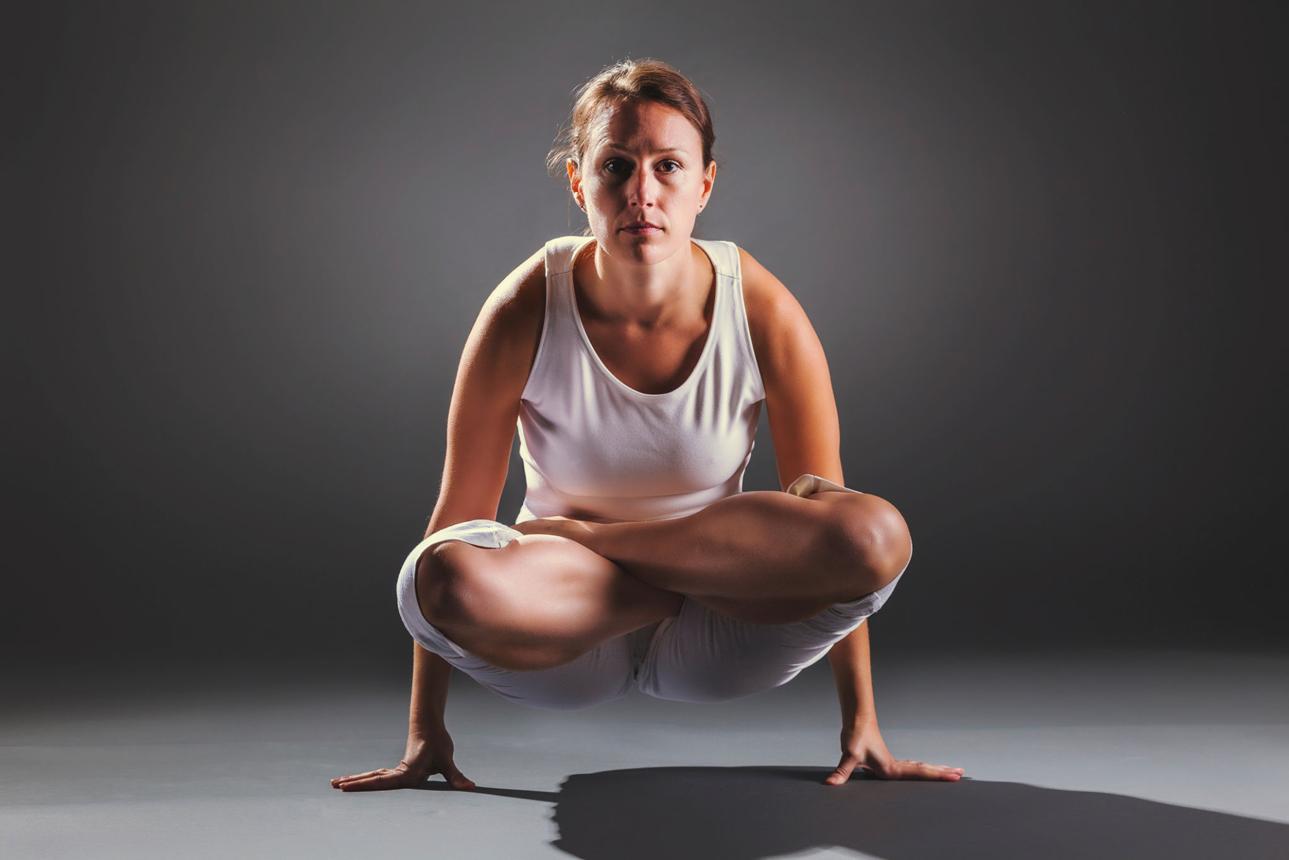
 Kukkutasana (Rooster Pose) is an advanced arm-balancing yoga posture performed with the legs in Lotus Pose and the palms pressing into the floor to lift the body.
It requires considerable wrist and shoulder strength, core stability, hip mobility, and balance.
1. Meaning and Sanskrit Origin
- Sanskrit: कुक्कुटासन (Kukkutasana)
- Kukkuta: Rooster
- Asana: Posture or pose
The name refers to the rooster-like shape created when the practitioner lifts the body while balancing on the hands.
2. Benefits of Kukkutasana
Strengthens the upper body
Develops strength in the wrists, forearms, shoulders, triceps, and chest through controlled weight-bearing.
Builds core stability
Engages the abdominal muscles to help lift and stabilize the pelvis and legs.
Develops hip mobility
Requires external rotation of the hips and comfortable Lotus positioning. It should not be forced through the knees.
Improves concentration and balance
Encourages body awareness, coordinated breathing, and controlled movement.
3. Step-by-Step Instructions
Step 1: Sit in Padmasana
Sit on your mat and place each foot on the opposite thigh, provided this is comfortable and pain-free. Keep your spine upright.
Step 2: Position your arms
Carefully slide each arm through the space between the thigh and calf until your palms can rest flat on the floor beside your hips.
Step 3: Ground your hands
Spread your fingers, press through the palms, and gently engage your shoulders and abdominal muscles. Look slightly forward rather than sharply down.
Step 4: Lift your body
Exhale and press firmly into the floor to lift your hips and crossed legs. Start with a small lift; do not swing or jerk yourself upward.
Step 5: Hold and release
If stable, hold for 2–5 comfortable breaths. Lower slowly, release Lotus Pose carefully, and relax your wrists.
4. Common Mistakes to Avoid
- Forcing the feet into Lotus Pose when the hips are not sufficiently mobile.
- Twisting or placing excessive pressure on the knees.
- Collapsing the chest and shoulders while lifting.
- Holding the breath or using momentum to jump into the pose.
- Attempting the full arm balance before developing wrist and shoulder strength.
5. Contraindications and Safety
Avoid Kukkutasana or seek individualized professional guidance if you have:
- Wrist, elbow, or shoulder injuries.
- Knee or hip pain, particularly during Lotus positioning.
- Recent surgery or an acute musculoskeletal injury.
- A condition that makes arm-supported weight-bearing unsafe.
Because the knees are vulnerable in Lotus Pose, hip mobility—not pressure on the knees—must determine whether the leg position is appropriate. Stop immediately if you experience sharp pain, numbness, or tingling.
6. Beginner Modifications
If you cannot lift your body yet, you can still work toward the pose safely.
- Practise comfortable hip-opening movements without forcing Lotus.
- Build wrist and shoulder strength with wall-supported Plank and gentle weight shifts.
- Practise pressing your palms into the floor while seated, without attempting to lift.
- Progress to a brief, small lift only when the Lotus position and arm support are both comfortable.
7. Breathing and Duration
- Preparation: Breathe slowly and naturally.
- Lifting: Exhale gently as you press into your hands.
- Holding: Continue smooth, steady breathing.
- Release: Lower with control and relax the arms.
Beginners should prioritize controlled technique over holding time. Advanced practitioners may gradually extend the hold if the posture remains stable and pain-free.