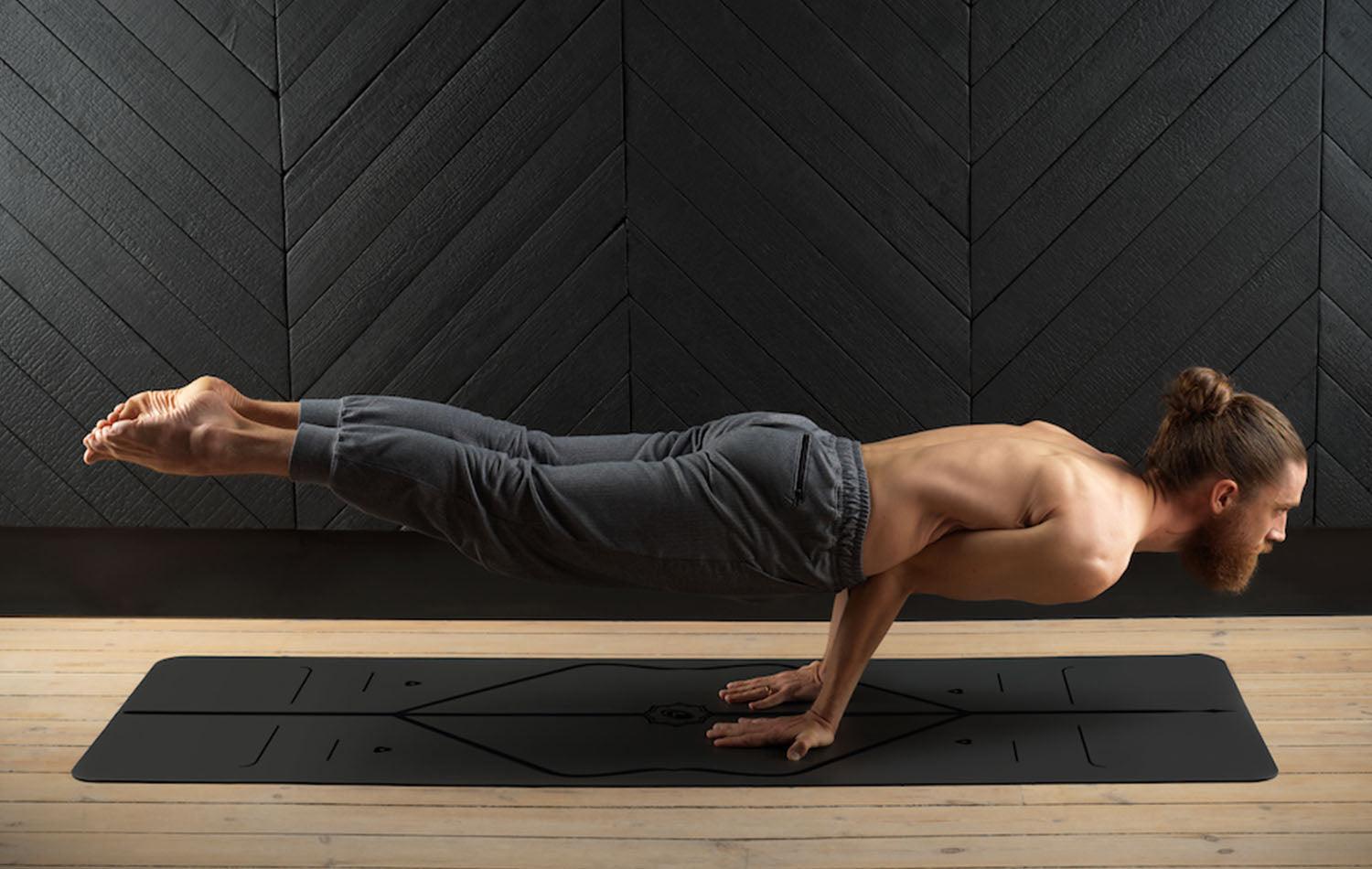
 Mayurasana (Peacock Pose) is an advanced arm-balancing posture in Hatha Yoga. In this pose, the body is held parallel to the floor while the hands support the entire body weight and the elbows press into the abdomen.
It requires considerable wrist strength, core stability, shoulder control, and balance. Practise it gradually under the guidance of an experienced yoga teacher.
1. Benefits of Mayurasana
- Builds upper-body strength: Engages the wrists, forearms, shoulders, and arms.
- Develops core stability: Activates the abdominal muscles to maintain a horizontal body position.
- Improves balance and concentration: Requires coordination, body awareness, and controlled breathing.
- Develops body control: Helps advanced practitioners improve arm-balancing skills.
- Traditional yogic perspective: Mayurasana is traditionally associated with digestive fire (Agni), but strong clinical evidence for specific digestive or detoxification benefits is lacking.
2. How to Practise Mayurasana
Step 1 — Prepare your position
Kneel on your mat with your knees slightly apart. Place your palms on the floor, fingers pointing towards your knees, with wrists gently extended.
Step 2 — Position your elbows
Bend your elbows and bring them close together against your abdomen, around the area below the navel. Lean forward slowly while keeping your neck comfortable.
Step 3 — Shift your weight
Engage your abdomen and lean forward gradually. Extend one leg behind you and then the other, using a supported or one-foot-at-a-time progression.
Step 4 — Lift into the pose
If you can balance safely, lift both feet and extend your legs behind you. Keep your body approximately parallel to the floor, gaze slightly forward, and breathe steadily.
Step 5 — Release carefully
Lower your feet and knees slowly to the mat. Relax your wrists and rest in a comfortable kneeling position.
3. Common Mistakes to Avoid
- Allowing the elbows to slide apart.
- Kicking the legs upward suddenly instead of shifting weight gradually.
- Holding the breath or straining the face and neck.
- Collapsing through the shoulders.
- Attempting the full pose before developing adequate wrist and arm strength.
4. Precautions and Contraindications
Mayurasana places substantial pressure on the wrists and abdomen. Avoid it if you have wrist or elbow injuries, significant shoulder problems, abdominal hernia, recent abdominal surgery, or are pregnant. If you have uncontrolled high blood pressure or a significant medical condition, obtain medical advice before attempting this advanced posture.
Important for your practice: Since Mayurasana is an advanced pose, do not use it as a starting exercise if you are experiencing lower-back pain or spinal stiffness. Build wrist mobility, shoulder strength, and core control first, and stop if you experience sharp pain, numbness, or dizziness.