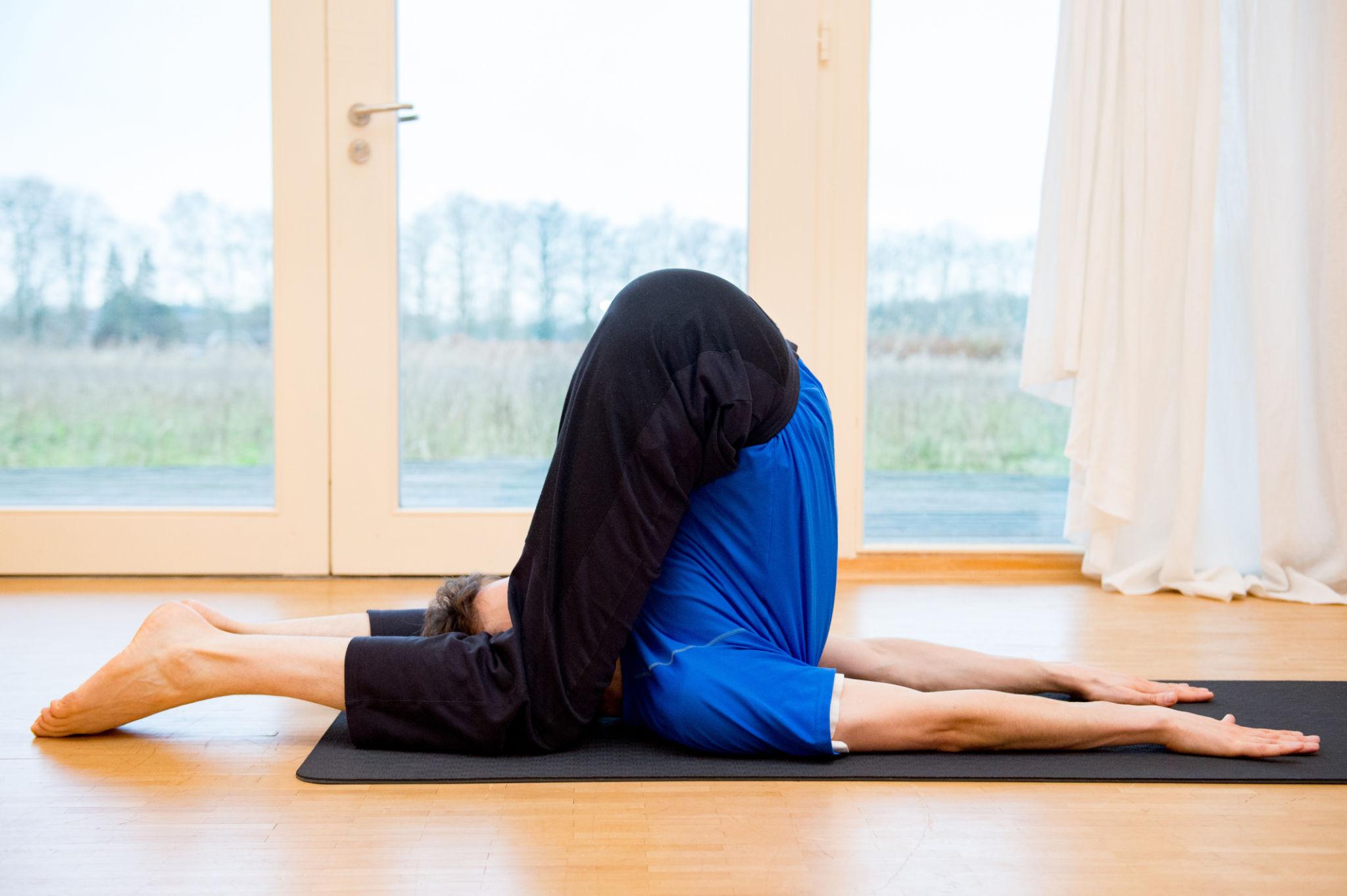
 Karnapidasana (कर्णपीड़ासन) is an advanced inverted yoga posture generally practiced as a continuation of Halasana (Plow Pose). In this pose, the knees bend toward the floor beside the ears, creating a compact position that resembles a gentle enclosure around the head.
The Sanskrit name combines Karna (ear), Pida (pressure or pressing), and Asana (pose). It requires spinal flexibility, controlled movement, and the ability to maintain a stable shoulder-supported position.
1. Benefits of Karnapidasana
When practiced appropriately and without discomfort, Karnapidasana may help develop:
- Spinal flexibility: Encourages controlled spinal flexion.
- Shoulder stability: Develops postural control while the body is supported on the shoulders.
- Body awareness: Improves awareness of alignment, breathing, and balance.
- Relaxation: The inward-facing position may feel calming for some experienced practitioners.
- Flexibility: Works on the posterior chain, including the back and hips.
These benefits vary by individual. The pose is not a proven treatment for digestive disorders, thyroid conditions, or other medical problems.
2. How to Perform Karnapidasana
Use the following steps only if you already have experience with shoulder-supported inversions.
Step 1: Enter Halasana
Lie on your back and move into Plow Pose using a controlled entry. Keep your weight on your shoulders, not your neck. Use a folded blanket beneath the shoulders if appropriate for your practice.
Step 2: Bend your knees
Slowly bend both knees and bring them toward the floor beside your head. Do not force the knees down or pull them toward the ears.
Step 3: Find a comfortable position
Let the knees approach the sides of the head only as far as your flexibility permits. Keep the neck still and breathe naturally.
Step 4: Exit slowly
Return to Halasana first, if comfortable, then lower your spine to the mat gradually with control. Avoid rolling or twisting the neck.
3. Breathing and Duration
- Entering: Breathe slowly and naturally.
- Holding: Maintain smooth, unforced breathing without holding your breath.
- Duration: Start with approximately 5–10 seconds under qualified supervision, and increase only if comfortable.
- Exiting: Move slowly and maintain control.
Longer holds are not necessary to benefit from the practice.
4. Common Mistakes to Avoid
- Putting pressure directly on the cervical spine or turning the head while inverted.
- Forcing the knees down to touch the floor.
- Holding the breath or straining to maintain the position.
- Entering or exiting abruptly.
- Practicing without supervision despite limited flexibility or inversion experience.
5. Contraindications and Safety
Karnapidasana places substantial demands on the neck and cervical spine. Avoid self-teaching this posture or attempting it without guidance from a suitably qualified yoga teacher.
Avoid the pose if you have neck or spinal problems, cervical disc disease, glaucoma or other eye conditions affected by inversion, uncontrolled high blood pressure, significant osteoporosis, or a recent head, neck, or spinal injury. Seek medical advice if you have a relevant health condition or are pregnant.
Stop immediately if you experience neck pain, numbness, tingling, dizziness, visual changes, or difficulty breathing.