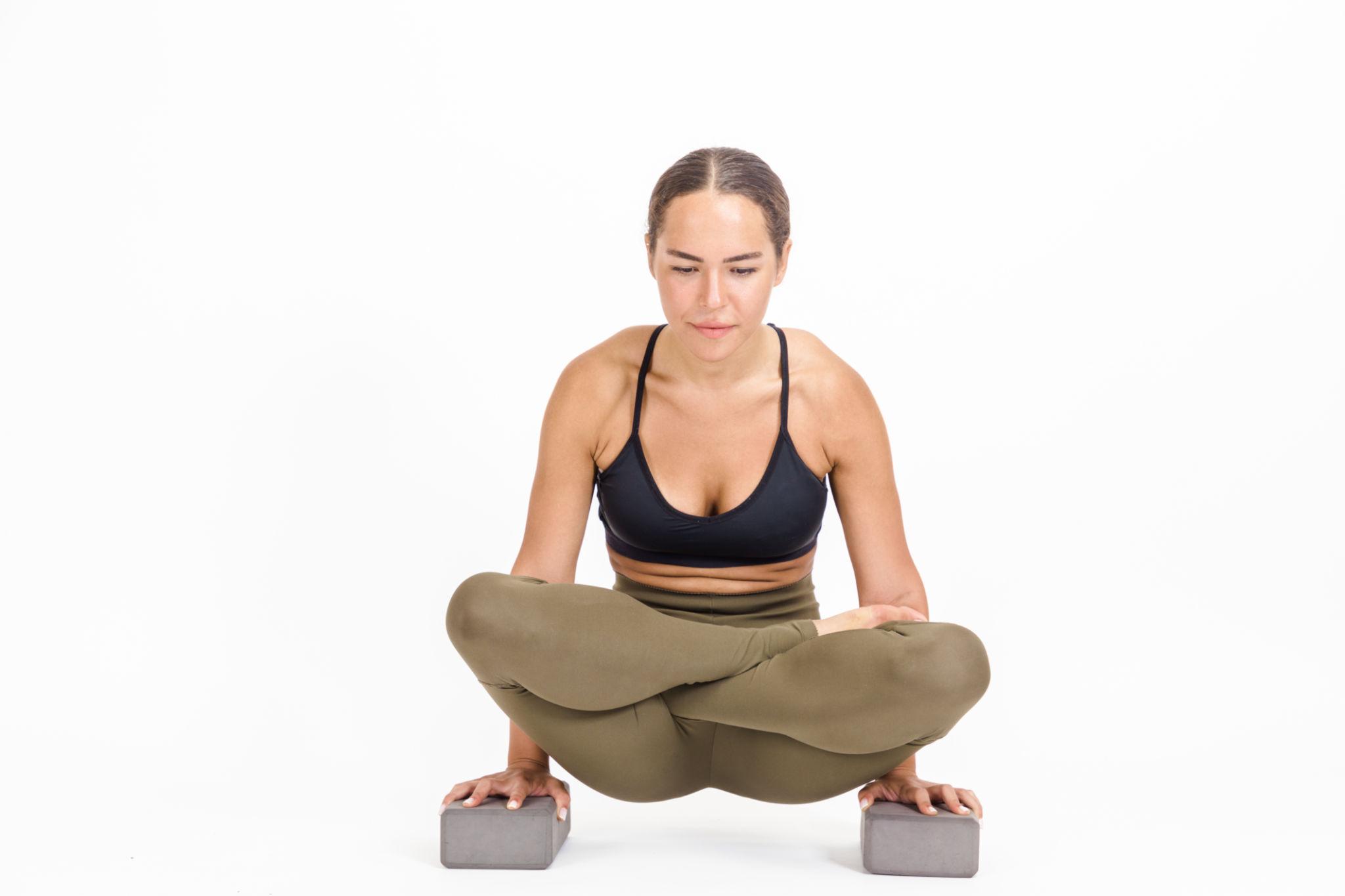
 Tolasana, commonly known as Scale Pose, is an advanced arm-balancing yoga posture in which the practitioner lifts the body and crossed legs off the floor using arm strength and core engagement.
It is traditionally practised from Padmasana (Lotus Pose).
The Sanskrit word Tola means “scale” or “balance,” reflecting the body's lifted position.
1. Benefits of Tolasana
- Strengthens the arms and wrists: Develops strength in the triceps, shoulders and forearms.
- Activates the core: Engages the abdominal muscles to lift and stabilise the body.
- Improves balance: Develops body awareness and coordination.
- Builds concentration: Requires controlled breathing and focused attention.
- Develops upper-body stability: Helps practitioners progress towards other arm balances.
2. Step-by-Step Instructions
Step 1: Sit in Lotus Pose
Sit on your mat and cross your legs into Padmasana, placing each foot on the opposite thigh. Keep your spine upright and shoulders relaxed.
Step 2: Place Your Hands
Place your palms firmly on the floor beside your hips, fingers spread. If your hands do not reach the floor comfortably, use sturdy yoga blocks.
Step 3: Lift Your Body
Press down through your palms, engage your abdominal muscles and lift your hips and crossed legs off the mat. Keep your neck relaxed and avoid shrugging your shoulders.
Step 4: Hold and Release
Hold for 3–5 comfortable breaths if you can maintain control. Lower your hips slowly and release Lotus Pose carefully.
3. Precautions and Contraindications
Avoid or modify Tolasana if you have:
- Wrist, elbow or shoulder pain or injury.
- Knee or hip problems that make Lotus Pose uncomfortable.
- Recent abdominal or other relevant surgery.
- Insufficient strength to support your body safely.
Important: Never force your knees into Lotus Pose. The position should come from sufficient hip mobility, not twisting the knees. Stop if you experience sharp pain, numbness or tingling.
4. Breathing and Practice Tips
- Inhale while lengthening your spine and preparing.
- Exhale gently as you press down and lift.
- Continue breathing normally; do not hold your breath.
- Start with 2–3 controlled attempts rather than prolonged holds.
- Practise on a nonslip surface, with a qualified yoga teacher if possible.